

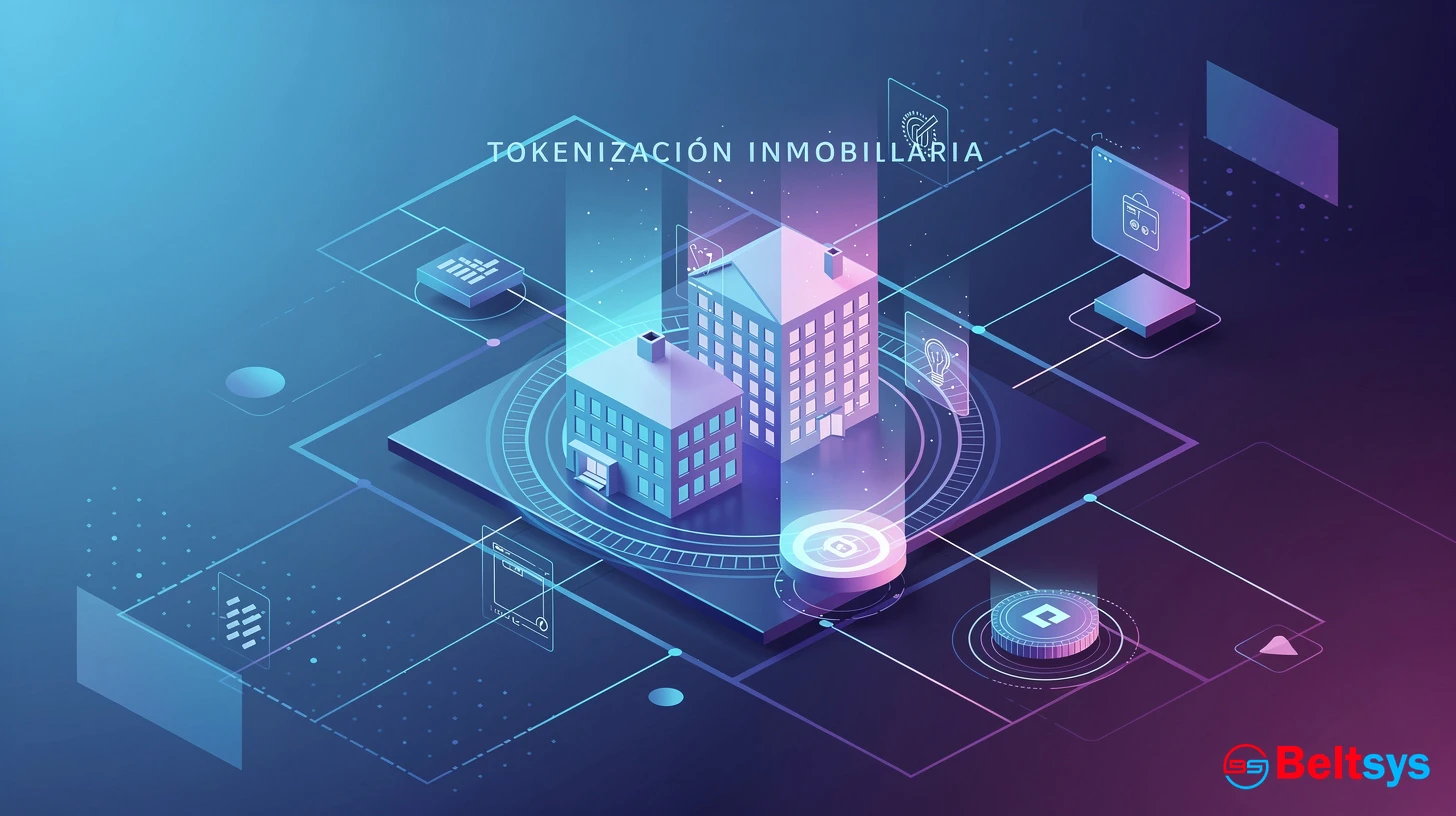
Real estate tokenization is the process of representing ownership rights or economic interests in a property as digital tokens on a blockchain. But not all tokenization is the same — Chainlink identifies four distinct models, and the legal structure (SPV, trust, direct) determines what the token actually represents.
The numbers speak: Roland Berger projects a $3 trillion market by 2030 (CAGR 60%). According to EY, 80% of high-net-worth investors are already investing or planning to invest in tokenized assets, with real estate as the 2nd most attractive asset class. Deloitte found that 58% of real estate firms have implemented or are piloting tokenization.
4 Models of Tokenized Real Estate

Chainlink defines four tokenization models:
| Model | How It Works | Token Type | Best For |
|---|---|---|---|
| Simple NFT | Entire property = 1 NFT | ERC-721 | Full ownership transfer |
| Dynamic NFT | NFT with auto-updating metadata (valuation, occupancy) | ERC-721 + oracles | Properties with changing data |
| Fractionalized | Property divided into fungible tokens | ERC-20 / ERC-3643 | Fractional investment, liquidity |
| Cash Flows | Separate income rights from ownership | ERC-20 | Rental income distribution |
The first NFT home sold for $175,000 (Entrepreneur via Chainlink). But the dominant model in 2026 is Fractionalized — fungible tokens representing shares in an SPV that owns the property.
How Real Estate Tokenization Works: Step by Step
| Step | Action | Detail |
|---|---|---|
| 1 | Acquire property | Direct purchase or contribution to SPV |
| 2 | Create legal vehicle | SPV (LLC, trust, or foundation) holds title deed |
| 3 | Structure the offering | Define token rights: income, appreciation, governance |
| 4 | Deploy smart contracts | ERC-3643 for compliance or ERC-20 for simpler structures |
| 5 | Onboard investors | KYC/AML verification, whitelist, accreditation check |
| 6 | Token sale | Primary offering (private or public) |
| 7 | Property management | Rental, maintenance, appreciation |
| 8 | Distribute returns | Automated via smart contract — rental income + capital gains |
Revenue model for platforms: AWS notes that settlement fees on token transfers create recurring revenue — unlike traditional real estate, where commissions are one-time events.
The $3 Trillion Opportunity: Market Data
| Source | Current Market | 2030 Projection | CAGR |
|---|---|---|---|
| Roland Berger | $119B (2023) | $3T | 60% |
| BCG | $120B | $3.2T | 49% |
| Citibank | — | $1.5T TAM | — |
| Gartner | “Adolescent technology” | Mainstream in 2-5 years | — |
| Adoption Metric | Data | Source |
|---|---|---|
| HNW investors investing/planning | 80% | EY |
| Institutional investors investing/planning | 67% | EY |
| RE = most attractive (HNW) | 49% | EY |
| RE = most attractive (institutional) | 56% | EY |
| Portfolio allocation (institutional) | 5.6% | EY (by 2026) |
| Portfolio allocation (HNW) | 8.6% | EY (by 2026) |
| RE firms engaged | 58% (12% live, 46% piloting) | Deloitte (Jun 2024) |
| Platform growth | 75% increase in 2023 | Digital Asset Research |
Legal Structures: SPV, Trusts, and Direct Ownership
| Structure | How It Works | Jurisdiction | Best For |
|---|---|---|---|
| SPV (LLC) | Token = share in LLC that owns property | US (Delaware), EU | Most common, flexible |
| Trust | Token = beneficial interest in trust | US, UK, Singapore | Institutional, multi-asset |
| Direct tokenization | Token = direct property right | Limited jurisdictions | Emerging, legally complex |
| Participative loan | Token = debt claim on SPV | Spain, EU | European compliance |
The AWS framework emphasizes: the token represents ownership of the legal entity (SPV/trust) that holds the title deed — not direct ownership of the physical property in most cases.
Regulation: US (SEC) and EU (MiCA) Frameworks
| Regulation | Scope | Status |
|---|---|---|
| US SEC Reg D | Private placement exemption (accredited investors) | Active — most US tokenizations use this |
| US SEC Reg S | Offshore offerings excluded from US registration | Active |
| US SEC Reg A+ | Mini-IPO up to $75M (non-accredited allowed) | Active but costly |
| EU MiCA (2023/1114) | Crypto-assets, utility tokens, stablecoins, service providers | In effect since Dec 30, 2024 |
| EU DLT Pilot Regime (2022/858) | Sandbox for tokenized financial instruments | Active, multiple EU countries |
| Spain CNMV | Security token supervision, sandbox | Active, projects approved |
| UK FCA | Crypto regulatory framework in development | Evolving |
No EN competitor covers the EU regulatory framework — ScienceSoft only discusses US SEC. This is a critical gap for global investors.
ERC-3643: The Compliance-Ready Standard
ERC-3643 (T-REX Protocol) is the Ethereum standard for security tokens with built-in compliance:
| Feature | Standard ERC-20 | ERC-3643 |
|---|---|---|
| KYC/AML | Not integrated | On-chain, mandatory |
| Whitelist | Manual or external | Native in contract |
| Transfer restrictions | None | Only between verified investors |
| Regulatory compliance | Issuer’s responsibility | Automatic via smart contract |
| Token recovery | Not possible | Authority can freeze/recover |
| Reporting | Manual | Automated on-chain |
At Beltsys, we specialize in ERC-3643 implementation for real estate tokenization — smart contracts with integrated KYC/AML, whitelist management, and automated compliance for US and EU regulatory frameworks.
Top Real Estate Tokenization Platforms
| Platform | Blockchain | Model | Geography | Notable |
|---|---|---|---|---|
| RealT | Ethereum/Gnosis | Fractional (LLC) | US properties | Pioneer, daily rental income |
| Blocksquare | Ethereum + IPFS | Fractional | EU (Slovenia-based) | Ethereum + IPFS fractionalization |
| Securitize | Multi-chain | Security tokens | US, EU | SEC-registered, institutional |
| Tokeny | Ethereum | ERC-3643 | EU (Luxembourg) | Compliance-native |
| Brickken | Ethereum | White-label | EU (Spain) | Platform for issuers |
| Elevated Returns | Ethereum | Fractional | US | Proved feasibility early |
Real Estate Tokenization vs REITs
| Feature | REITs | Tokenized Real Estate |
|---|---|---|
| Minimum investment | Varies ($500-5,000+) | From $50-100 |
| Liquidity | Stock exchange (daily) | Secondary token markets (24/7) |
| Transparency | Quarterly reports | Real-time on blockchain |
| Property selection | Fund manager decides | Investor chooses specific properties |
| Geographic access | Usually domestic | Global (wallet + KYC) |
| Fees | Management fees 0.5-2% | Smart contract fees (lower) |
| Settlement | T+2 days | Minutes (atomic swap) |
| Governance | Board decides | Token holders can vote (DAO) |
How to Build a Real Estate Tokenization Platform
| Component | Technology | Function |
|---|---|---|
| Smart contracts | ERC-3643 (Solidity) | Tokens, compliance, distribution |
| KYC/AML | Sumsub, Onfido, Synaps | Identity verification |
| Investor dashboard | React/Next.js | Portfolio, income, claims |
| Backend | Node.js/Python | API, asset management |
| Oracles | Chainlink | On-chain property valuation |
| Secondary market | Whitelisted DEX | Trading between verified investors |
| Custody | Fireblocks, BitGo | Institutional-grade custody |
| Scope | Timeline | Cost Range |
|---|---|---|
| MVP (1 property, basic) | 10-14 weeks | $40K-80K |
| Full platform (multi-asset, secondary market) | 20-28 weeks | $100K-200K |
| Enterprise (full compliance, multi-jurisdiction) | 28-40 weeks | $200K-400K+ |
| Smart contract audit | 2-4 weeks | $5K-50K |
At Beltsys, real estate tokenization is our core service. 300+ blockchain projects since 2016: ERC-3643 smart contracts, investor dashboards, KYC/AML integration, and regulated secondary markets. Web3 development | Contact us.
Frequently Asked Questions About Real Estate Tokenization
What is real estate tokenization?
Real estate tokenization represents property rights or economic interests as digital tokens on blockchain. Tokens typically represent shares in an SPV (LLC or trust) that owns the property — not direct ownership. It enables fractional investment from $50-100. The market is projected to reach $3T by 2030 (Roland Berger).
Is real estate tokenization legal?
Yes, within regulatory frameworks: US uses SEC Reg D (accredited investors), Reg S (offshore), Reg A+ (mini-IPO). EU uses MiCA (in effect since Dec 2024), DLT Pilot Regime, and national regulators (CNMV in Spain, BaFin in Germany). Security tokens require appropriate registration and compliance.
What returns can I expect?
Typically 5-12% annual rental yield plus potential appreciation. Returns depend on property type, location, and management. Platforms like RealT distribute daily rental income. Returns are not guaranteed — diversification across properties and platforms reduces risk.
What is ERC-3643 and why does it matter?
ERC-3643 is the Ethereum standard for security tokens with built-in compliance. It integrates KYC/AML verification, whitelist, and transfer restrictions directly in the smart contract — only verified investors can transact. Critical for regulated real estate tokenization in both US and EU markets.
How does tokenized real estate compare to REITs?
Tokenization offers: lower minimums ($50-100 vs $500+), 24/7 trading (vs market hours), real-time transparency (vs quarterly reports), specific property selection (vs fund manager), and global access. REITs offer: deeper liquidity (stock exchange), longer track record, and simpler regulatory compliance.
How much does it cost to build a tokenization platform?
MVP (1 property, basic): $40K-80K (10-14 weeks). Full platform (multi-asset, secondary market): $100K-200K (20-28 weeks). Enterprise (full compliance): $200K-400K+ (28-40 weeks). Audit: $5K-50K additional. Beltsys has built 300+ blockchain projects since 2016.
About the Author
Beltsys is a Spanish blockchain development company specializing in real estate tokenization, ERC-3643 smart contracts, and Web3 solutions for fintechs and real estate firms. With extensive experience across more than 300 projects since 2016, Beltsys builds complete tokenization platforms: compliance smart contracts, investor dashboards, KYC/AML integration, and regulated secondary markets. Learn more about Beltsys
Related: Real Estate Tokenization Related: Smart Contract Development Related: Web3 Development Related: Blockchain Consulting