

html
In a world full of advances, Artificial Intelligence and blockchain lead toward autonomy and security. These technologies together are creating a new concept: decentralized AI. This advance is not just a technological revolution, it changes how we apply innovation in AI. We explore its contribution to an efficient, secure, and united future.
Decentralization could be key to overcoming dependencies and limitations of traditional AI. An era full of possibilities redefining the use of Artificial Intelligence in our society awaits us.
Key Conclusions
- Decentralized AI promises improvements in security and efficiency alongside blockchain.
- It is crucial for creating a future with reliable and transparent technologies.
- It drives collaboration and global data sharing.
- Using smart contracts in blockchain improves autonomy in AI.
- Decentralized AI is increasingly important for optimizing industries like finance and logistics.
The content of this blog is for informational and educational purposes only. It is not professional advice of any kind. The opinions here are those of the author and do not necessarily reflect those of the company.
Blockchain and artificial intelligence evolve rapidly. The information may not be complete or up to date.
Introduction to decentralized Artificial Intelligence
Artificial Intelligence has changed a lot since it began. Now, we are exploring decentralized AI. This new form is a revolutionary technology and promises enormous changes.
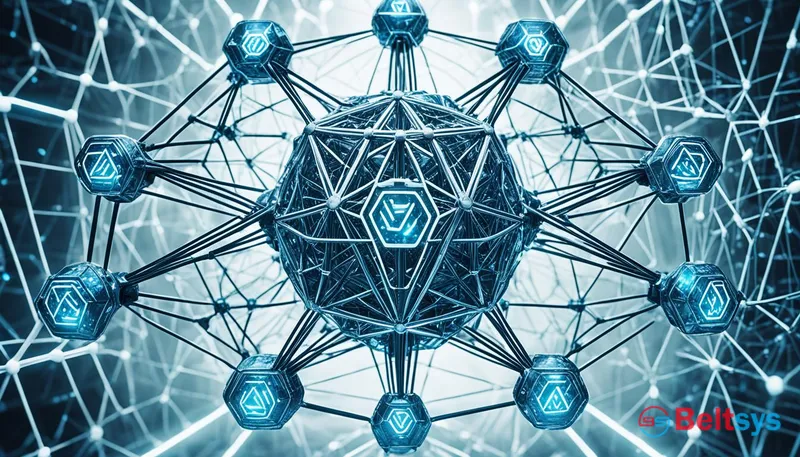
In decentralized AI, control is distributed among multiple locations. There is no single point that, if it fails, everything goes down. This makes systems more secure and transparent, something highly demanded today.
- Democratization of access: Now, small businesses and developers can use advanced technology without spending a lot.
- Resistance to censorship: With decentralization, no one can control everything. This allows information to flow freely.
- Enhanced collaboration: Decentralized systems allow people from all over the world to work together and share benefits.
Decentralization is changing areas such as healthcare and logistics. It is preparing us for future innovations in technology. With the union of blockchain and decentralized AI, new possibilities and challenges open up in our digital world.
Principles of decentralization in AI
Decentralization in AI not only improves transparency but also security. By distributing data and processes among multiple nodes, the risks of centralized systems are reduced. This achieves a more solid environment that is resistant to failures or attacks.
These principles ensure that decentralized systems are very secure. Additionally, data efficiency and integrity are maintained. Committing to decentralization is committing to technological progress.
Transparency and security
Decentralization leads to greater transparency. All actions in decentralized AI systems can be verified. This prevents erroneous or malicious manipulation.
Security in AI grows notably when there are no single points of failure. If one part of the system is attacked, the rest remains intact. This is essential for areas like finance and cybersecurity.
Reduction of failure points
Decentralized systems are naturally more resistant to errors. Thanks to their design, if one node fails, the others continue functioning without interruption. This guarantees stability and reliability in process automation.
| Feature | In a centralized system | In a decentralized system |
|---|---|---|
| Failure point | Single and critical | Diversified |
| Transparency | Limited by access | Total and open |
| Security | Vulnerable to concentrated attacks | Distributed security |
Blockchain: the catalyst for decentralized AI
Blockchain is changing the way decentralized AI solutions are created. It offers a secure record that cannot be changed. Additionally, it allows creating transparent systems that function autonomously.
Smart Contracts and Autonomy
Smart Contracts are programs that function autonomously on the Blockchain. They follow specific rules. They are key for Blockchain systems to operate independently. They make transactions clear and automatic, without intermediaries. This is fundamental for decentralized AI, because it allows intelligent agents to act independently in a reliable manner.
Interoperability and Shared Data
Interoperability is another important contribution of Blockchain to decentralized AI. It allows different Blockchains to communicate and share data securely. This way, a stronger and more scalable AI environment can be created. This improves the function of AI applications and facilitates teamwork and access to more data.
| Benefit | Description | Impact on Decentralized AI |
|---|---|---|
| Operations Autonomy | Facilitated by Smart Contracts that perform transactions and operations without intermediaries. | Provides an autonomous action framework for AI agents, improving efficiency and response speed. |
| Security and Transparency | Immutable and public record of all operations. | Increases trust in AI applications, since operations and decisions are verifiable and transparent. |
| Interoperability between Systems | Seamless communication between different Blockchain technologies. | Enables borderless integration of AI in diverse contexts, expanding the capabilities and application of decentralized intelligence. |
In conclusion, combining Blockchain, Smart Contracts, autonomy, and interoperability creates an environment where decentralized AI can grow. This system has the potential to change various aspects of our society and the digital economy. The evolution of these technologies leads us toward a future full of innovations across diverse fields.
Emerging technologies in autonomous systems
Autonomous systems are an emerging technology that changes how we think about innovation. Together with decentralized AI, they are improving different sectors. This includes industries and social aspects.
These technologies bring more independence and effectiveness. They advance not only in software but also in how they perceive and collect data. This is vital for their success.
Now, with the fusion of technological innovation and autonomous systems, great things are happening. We see this in self-driving cars, where safety is key. Also, agriculture and drones show how decentralized AI optimizes processes.
| Application | Technology Used | Key Benefits |
|---|---|---|
| Autonomous Vehicles | Advanced sensing, AI | Accident reduction, transportation efficiency |
| Agricultural Robotics | Computer vision systems, decentralized AI | Greater precision in planting and crop care |
| Drones for inventories | Real-time data analysis, decentralized AI | Logistics optimization, reduced downtime |
Autonomous systems bring sustainable growth. They decrease human errors and better use resources. Together with decentralized AI, they bring us closer to complete autonomy.
Machine Learning and decentralized AI
Machine Learning has been key in the development of decentralized AI. It has made possible stronger and more secure systems. Thanks to distributed learning, broad collaboration is achieved while respecting data privacy.
Distributed and collaborative learning
In distributed learning, multiple computers work together to overcome AI challenges. This accelerates learning. Additionally, it handles large amounts of data without sacrificing security or integrity.
Data privacy and AI models
A crucial point of decentralized AI is how it protects our data. It uses encryption and security protocols. This way, sensitive data remains safe during model training.
| Feature | Benefit |
|---|---|
| Data distribution | High scalability and lower risk of concentrated attacks |
| Collaborative training | Resource optimization and improved response times |
| Protection in data transmission | Greater confidentiality and information integrity |
Use cases of decentralized intelligence
The use of decentralized AI is changing many sectors. It is providing new solutions that increase efficiency and security. Let’s see its impact on the supply chain and in the financial sector.
Blockchain in the supply chain
The supply chain benefits greatly from blockchain. It provides total transparency in production and distribution. This reduces fraud, losses, and errors, greatly improving efficiency.
AI and decentralization in the financial sector
In the financial sector, decentralized AI greatly improves automation and transaction security. With decentralized data, financial services are faster and more secure. This better meets customer needs today.
| Aspect | Impact on supply chain | Impact on financial sector |
|---|---|---|
| Transparency | High visibility of processes | Clarity in transactions |
| Security | Fraud reduction | Secure transactions |
| Efficiency | Route and resource optimization | Automation of financial services |
Challenges and limitations of decentralized AI
Decentralized AI has several AI challenges and important limitations. These difficulties can slow its development and widespread use. The technological challenges involved are a major barrier. These include scalability, interoperability, and data protection.
It is key to maintain harmony between the nodes of decentralized AI. Each node works independently. This can cause inconsistencies in results, a significant AI challenge.
Special attention is required in creating appropriate algorithms and consensus protocols.
| Challenge | Impact on Decentralized AI | Potential Solutions |
|---|---|---|
| Scalability | Difficulty handling large volumes of data and transactions | Improvements in infrastructure design and algorithm optimization |
| Interoperability | Challenges in integration between different platforms and systems | Development of common standards and protocols |
| Data security | Risks of attacks and failures in data protection | Implementation of advanced fintech and robust security measures |
Creating adequate laws for decentralized AI is complicated but crucial. Policymakers must understand technological advances. This allows them to create laws that protect users and encourage innovations. Additionally, decentralization complicates any attempt at central regulation.
- Scalability and performance in different use situations
- Effective compliance with privacy and data regulations
- Decentralized governance requiring consensus from multiple parties
In summary, decentralized AI brings new chances to innovate and be more efficient. However, technological challenges and limitations in standards must be managed well. This ensures the progress of this emerging technology.
The future of distributed learning and its global impact
The future of AI will change how we access and use information. Decentralized artificial intelligence promises to improve education and training. This will allow us to surpass limits and bring knowledge to everyone. Thanks to distributed learning and blockchain, the way of teaching will be more inclusive and effective. This advance adapts to the needs of the 21st century and impacts different social areas globally.
Education and training through decentralized AI
AI transforms the educational field by offering more personal and accessible training. A world where decentralized AI addresses personal learning demands and styles is possible. This breaks barriers, geographic and socioeconomic, expanding the reach of the global impact of education. Now, fair and universal knowledge is a right, not a privilege.
Empowering communities through technology
Decentralized AI especially helps vulnerable communities, fostering their growth. It offers access to information and tools for independent learning. This educational influence of AI has effects on the economic and social fronts, promoting a society with educational equality.
The information in this blog seeks to inform and educate. It does not replace professional guidance. The ideas here are those of the author and may not coincide with those of the company. Remember that blockchain and AI are in constant evolution.
FAQ
What is decentralized AI and how does it differ from conventional AI systems?
Decentralized AI operates on networks like blockchain, not in a single location. This brings better collaboration and more security. It is also less vulnerable to errors compared to traditional AI.
How can decentralization in AI improve the security and transparency of intelligent systems?
It makes it harder for attackers to damage the entire system. Blockchains provide transparency. This way, AI actions can be easily tracked and audited.
What role does blockchain technology play in decentralized AI?
Blockchain is the foundation for building decentralized AI. It secures and makes the record of transactions and smart contracts transparent. It helps create reliable systems and facilitates cooperation between AI platforms.
What are autonomous systems and how are they related to decentralized AI?
They are systems that function without human help. They benefit from security and collaboration thanks to decentralization.
What does distributed and collaborative learning consist of in the context of Machine Learning and decentralized AI?
Distributed learning uses many nodes to process data. This improves AI models. Additionally, it protects privacy since data is processed locally.
What are some examples of decentralized AI use cases?
It is used in supply chain optimization and in the financial sector. It improves traceability, payment security, and risk analysis.
What are the main challenges and limitations facing decentralized artificial intelligence?
Challenges include the difficulty of integrating systems and the need for robust networks. There are regulatory and ethical problems, such as data privacy.
How can decentralized AI affect the future of education and training?
It offers more access to educational resources and can personalize learning. It helps educational solutions adapt to specific needs.
What role does community empowerment play in the adoption of decentralized AI?
It facilitates self-management and knowledge exchange. It helps communities solve their problems efficiently and fosters innovation.