
The Chainlink guide to zero knowledge proof — the most comprehensive in English — is from July 2024. It misses the explosion that happened between 2025 and 2026: a $11.7 billion ecosystem with $3.5 billion in daily trading volume, six major zk-rollup networks live on mainnet, and enterprise adoption driven by GDPR and MiCA compliance requirements.
A zero knowledge proof (ZKP) is a cryptographic protocol that allows one party (the prover) to demonstrate to another (the verifier) that a statement is true — without revealing any information beyond the truth of the statement itself. In practice: you can prove you’re over 18 without revealing your date of birth, or prove financial solvency without showing your bank statement.
What Is a Zero-Knowledge Proof? The Concept Explained
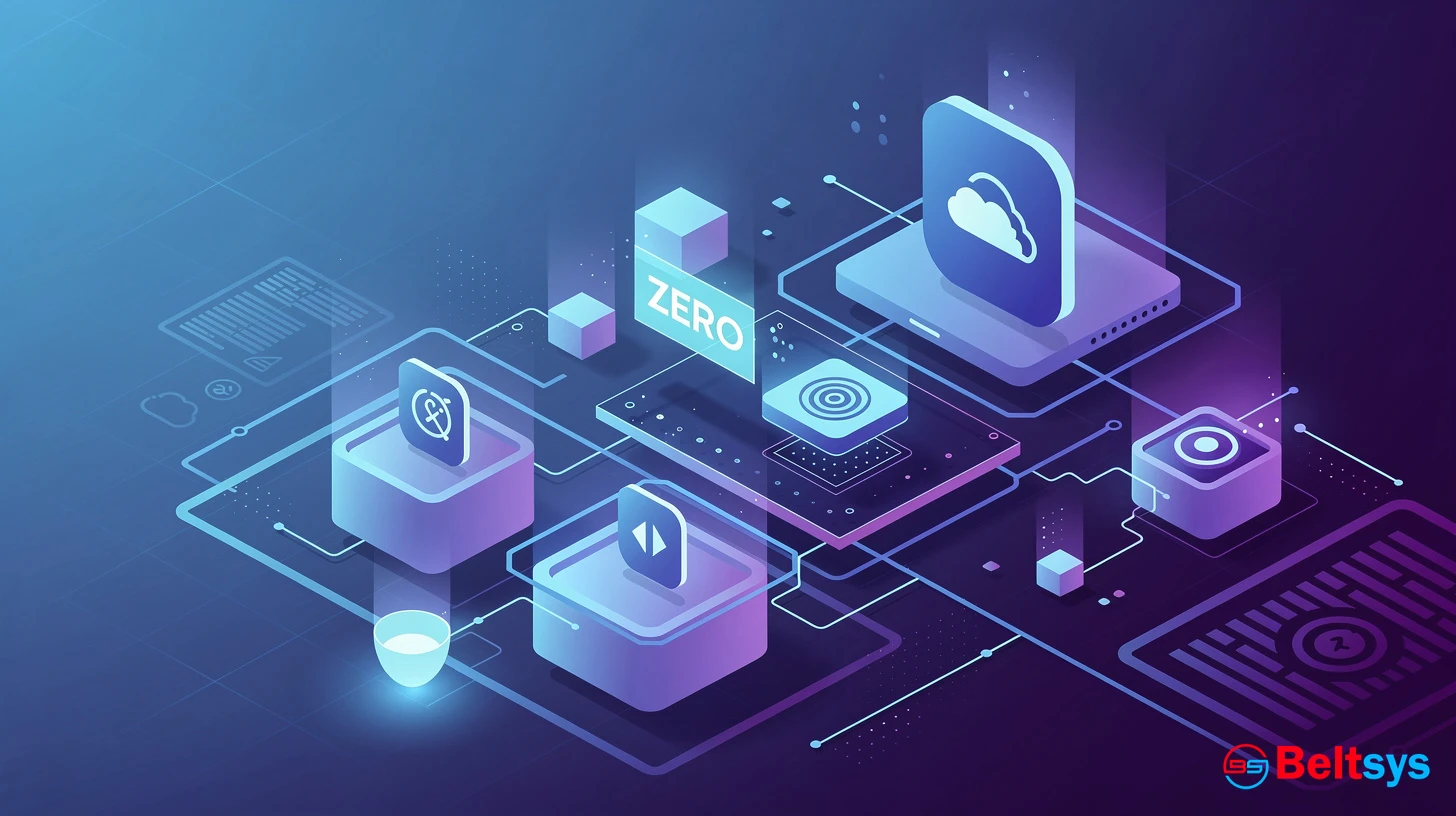
A zero knowledge proof is a cryptographic method where the prover convinces the verifier that they possess certain knowledge or that a statement is true, without transmitting any data about that knowledge. The concept was formalized by Shafi Goldwasser, Silvio Micali, and Charles Rackoff in their 1985 MIT paper “The Knowledge Complexity of Interactive Proof-Systems”.
In 2026, ZKP has evolved from academic concept to critical infrastructure:
- Blockchain scaling: zk-Rollups process thousands of transactions off-chain and post validity proofs on-chain
- Regulated privacy: GDPR demands data minimization — ZKP enables verification without exposure
- Web3 compliance: MiCA requires identity verification — ZKP enables KYC without revealing personal data to the protocol
- Digital identity: Verifiable credentials that prove attributes without revealing complete identity
How ZKP Works: The Ali Baba Cave Analogy
The classic analogy (Jean-Jacques Quisquater, 1989): imagine a cave shaped like a ring with a locked door in the middle. Alice wants to prove to Bob she knows the door’s password, without revealing it.
- Alice enters through a random side of the cave (A or B)
- Bob, waiting outside, asks her to exit from a specific side
- If Alice knows the password, she can always traverse the door and exit correctly
- They repeat multiple times — the probability of success without the password is 1/2ⁿ
After 20 rounds, the probability of faking it is 1/1,048,576. Bob is convinced Alice knows the password, but he has learned nothing about it.
The 3 Fundamental Properties of Zero Knowledge Proof
| Property | Meaning | Guarantee |
|---|---|---|
| Completeness | If the statement is true, the verifier is convinced | Honest prover always succeeds |
| Soundness | If the statement is false, no dishonest prover can convince the verifier | Protection against fraud |
| Zero-knowledge | The verifier learns nothing beyond the truth of the statement | Complete privacy of underlying data |
These three properties, formalized by Goldwasser, Micali, and Rackoff in 1985, remain the theoretical foundation of all modern ZK cryptography.
Interactive vs Non-Interactive Zero-Knowledge Proofs
| Type | How It Works | Advantage | Limitation | Example |
|---|---|---|---|---|
| Interactive ZKP | Prover and verifier exchange messages in real-time | Intuitive, well-studied | Requires active communication | Ali Baba cave |
| Non-interactive (NI-ZKP) | Prover generates a proof anyone can verify without interaction | Scalable, offline verification | Requires CRS or hash functions | zk-SNARKs, zk-STARKs |
In blockchain, non-interactive proofs matter: the prover generates a proof once and any network node can verify it without direct communication. This is what makes zk-rollups possible.
Types of ZKP: zk-SNARKs vs zk-STARKs vs PLONK vs Bulletproofs
| Criterion | zk-SNARKs | zk-STARKs | PLONK | Bulletproofs |
|---|---|---|---|---|
| Full name | Succinct Non-interactive Arguments of Knowledge | Scalable Transparent Arguments of Knowledge | Permutations over Lagrange-bases for Oecumenical Non-interactive arguments of Knowledge | — |
| Trusted setup | Yes (per-circuit) | No (transparent) | Universal (one-time) | No |
| Proof size | Very small (~288 bytes) | Larger (~45-200 KB) | Small | Short |
| Verification speed | Very fast | Fast | Fast | Slower |
| Quantum resistant | No | Yes | No | No |
| Prover scalability | Limited | High | Medium | Limited |
| Used by | Zcash, zkSync, Polygon zkEVM | StarkNet (StarkWare) | Aztec, Dusk | Monero, Mimblewimble |
| Year introduced | 2011 (coined) / 2013 (Pinocchio) | 2018 (Ben-Sasson) | 2019 | 2017 |
zk-SNARKs dominate the current ecosystem thanks to tiny proofs and ultra-fast verification. The tradeoff: trusted setup — an initial ceremony that, if compromised, can undermine system security. Zcash was the first large-scale implementation. Groth16 (2016) remains the most efficient construction.
zk-STARKs (developed by Eli Ben-Sasson / StarkWare) eliminate the trusted setup and are quantum-resistant. Tradeoff: larger proofs. StarkNet is the most advanced implementation with its Cairo programming language.
PLONK (2019) offers a middle ground: universal trusted setup done once, reusable for any program. Used by Aztec and Dusk Network.
Bulletproofs (2017): short proofs without trusted setup, designed for private transactions. Used in Monero and Mimblewimble protocols.
A Brief History: From 1985 MIT Paper to $11.7B Ecosystem
| Year | Milestone |
|---|---|
| 1985 | Goldwasser-Micali-Rackoff: “The Knowledge Complexity of Interactive Proof-Systems” (MIT) |
| 2011 | Term “zk-SNARK” coined |
| 2013 | Pinocchio: first practical zk-SNARK for general computation |
| 2016 | Groth16: efficient SNARK construction (still the standard) |
| 2016 | Zcash launches: first major ZKP implementation for private transactions |
| 2017 | Bulletproofs: short proofs without trusted setup |
| 2018 | zk-STARKs: transparent, quantum-resistant proofs (Ben-Sasson / StarkWare) |
| 2019 | PLONK: universal trusted setup |
| 2022-2024 | zk-Rollup mainnet launches: zkSync, StarkNet, Polygon zkEVM, Scroll, Linea |
| 2026 | $11.7B ZK ecosystem with $3.5B daily volume |
zk-Rollups: How ZKP Is Scaling Blockchain
zk-Rollups are the most transformative application of zero knowledge proof in blockchain:
- Bundle hundreds/thousands of transactions off-chain
- Generate a validity proof (zk-SNARK or zk-STARK) proving all transactions are valid
- Post only the proof and compressed data to the main chain (Ethereum)
- Any node can verify the proof without re-executing transactions
| Project | ZKP Type | Status | Differentiator |
|---|---|---|---|
| zkSync Era | zk-SNARKs | Mainnet | Native account abstraction, DeFi ecosystem |
| StarkNet | zk-STARKs | Mainnet | Cairo language, quantum resistance |
| Polygon zkEVM | zk-SNARKs | Mainnet | Full EVM compatibility |
| Scroll | zk-SNARKs | Mainnet | Bytecode-level EVM equivalence |
| Linea | zk-SNARKs | Mainnet | Backed by Consensys (MetaMask) |
| Loopring | zk-SNARKs | Mainnet | DEX and payments focused |
zk-Rollups process transactions at a fraction of Ethereum mainnet cost — $0.01-0.10 vs $1-50 — while inheriting mainnet security. Per Alchemy and Chainlink, they represent the scaling technology with the highest long-term potential.
The ZK Ecosystem in 2026: $11.7B and Growing
| Metric | Value | Source |
|---|---|---|
| Total ZK market cap | $11.7B | BingX |
| Daily trading volume | $3.5B | BingX |
| Active zk-Rollup projects | 6+ on mainnet | Alchemy |
| WEF classification | Top 5 privacy-enhancing technology | NTT Data / WEF 2019 |
Beyond zk-rollups, the ecosystem includes:
- Mina Protocol: Succinct blockchain where a full node fits on a smartphone via recursive SNARK composition. Enables zkApps written in TypeScript with o1js.
- Zcash: First major zk-SNARK implementation for private transactions
- Validiums: Validity proofs on-chain + data off-chain — more scalable but with data availability risk (Chainlink)
- Aztec: Encrypted rollup for private DeFi transactions using PLONK
ZKP and Privacy Regulation: GDPR, MiCA, and Compliance
Zero knowledge proof resolves the fundamental tension between verification and privacy:
GDPR compliance: Article 25 (Data Protection by Design) requires data minimization — collecting only strictly necessary data. ZKP complies by design: verify attributes (age, solvency, nationality, credentials) without transmitting underlying data.
MiCA compliance: The EU crypto-asset regulation requires identity verification and regulatory compliance. ZKP enables:
- Qualified investor verification without revealing exact net worth
- AML screening without exposing transaction details
- Regulatory reporting with proofs rather than raw personal data
WEF recognition: The World Economic Forum identified ZKP as one of five key privacy-enhancing technologies for the financial sector (NTT Data).
For businesses operating with regulated tokens under MiCA, the combination of ERC-3643 + ZKP is the architecture balancing regulatory compliance with privacy.
ZKP and Asset Tokenization: Privacy + Compliance with ERC-3643
In real estate tokenization and real-world assets (RWA), ZKP solves a critical problem: verifying that investors meet regulatory requirements (KYC/AML, qualified investor status) without exposing personal data to the protocol or other participants.
ERC-3643 + ZKP: The regulated security token standard (ERC-3643) uses ONCHAINID for identity verification. Integration with ZKP makes verification privacy-preserving — smart contracts confirm the investor meets requirements without accessing personal data.
At Beltsys, we implement tokenization architectures where ZKP, ERC-3643, and regulatory compliance work in coordination — privacy for investors, compliance for issuers, and verifiability for regulators.
ZKP for Enterprise: Real-World Use Cases
Credential verification: Prove an employee holds a specific certification (ISO, PMP, CFA) without revealing full identity or other personal data.
Supply chain provenance: Prove a product meets quality standards or comes from an ethical source without revealing the supplier chain (trade secret).
KYC without data exposure: A customer completes KYC once and generates reusable ZK proofs — each service verifies compliance without accessing original data.
Financial audit: Prove solvency or tax compliance without revealing underlying transaction details.
Cross-border compliance: Verify regulatory compliance across different jurisdictions without sharing personal data between regulators — especially relevant with MiCA in Europe and SEC in the US.
Zero Knowledge vs Zero Trust: Understanding the Difference
| Concept | What It Is | Domain | Focus |
|---|---|---|---|
| Zero Knowledge Proof | Cryptographic protocol proving truth without revealing data | Cryptography / blockchain | Data privacy |
| Zero Trust | Security model: never trust, always verify | Cybersecurity / networking | Access control |
These terms are frequently confused. Zero knowledge is a cryptographic technique about data privacy. Zero trust is a security architecture about access control. They can complement each other: zero trust verifies every access request; ZKP can be part of that verification without exposing sensitive data.
Frequently Asked Questions About Zero Knowledge Proof
What is a zero knowledge proof in simple terms?
A zero knowledge proof is a cryptographic method that lets you prove something is true without revealing the underlying information. Example: prove you’re over 18 without showing your date of birth, or prove you have sufficient funds without revealing your balance. Formalized by Goldwasser, Micali, and Rackoff at MIT in 1985. Today it powers an $11.7B ecosystem.
What is the difference between zk-SNARKs and zk-STARKs?
zk-SNARKs generate very small proofs (~288 bytes) with ultra-fast verification but require a trusted setup ceremony. zk-STARKs don’t need trusted setup and are quantum-resistant but produce larger proofs (45-200 KB). SNARKs dominate the current ecosystem (zkSync, Polygon zkEVM). STARKs lead in StarkNet. PLONK offers a middle ground with universal setup.
What are zk-Rollups?
zk-Rollups are the most advanced blockchain scaling technology. They bundle hundreds of transactions off-chain, generate a validity proof (ZKP) proving all are valid, and post only the proof to Ethereum. Result: transactions at $0.01-0.10 vs $1-50 on mainnet while inheriting mainnet security. Key projects: zkSync, StarkNet, Polygon zkEVM, Scroll, Linea.
How does ZKP relate to GDPR?
ZKP natively complies with GDPR Article 25 (Data Protection by Design) because it verifies attributes without transmitting personal data. The World Economic Forum classified it as a top-5 privacy-enhancing technology for finance. For businesses: it enables KYC, age verification, and solvency checks without collecting or storing sensitive data.
Can ZKP be used in asset tokenization?
Yes. In regulated tokenization (ERC-3643), ZKP verifies that investors meet KYC/AML requirements without exposing personal data to the protocol. Smart contracts confirm compliance without accessing underlying data. This architecture balances investor privacy with regulatory compliance for issuers and verifiability for regulators.
Are zero knowledge proofs quantum-resistant?
It depends on the type: zk-STARKs are quantum-resistant because they use hash functions instead of elliptic curve cryptography. zk-SNARKs in their current form are not quantum-resistant. The industry is gradually migrating toward quantum-safe constructions as quantum computing advances.
About the Author
Beltsys is a Spanish blockchain development company specializing in Web3 infrastructure, smart contracts, and applied cryptography for enterprises and fintechs. With extensive experience across more than 300 projects since 2016, Beltsys implements architectures with zero knowledge proof, regulated tokenization with ERC-3643, and on-chain privacy solutions for the enterprise ecosystem. Learn more about Beltsys
Related: Smart Contract Development Related: Real Estate Tokenization Related: Web3 Development Related: Blockchain Consulting