

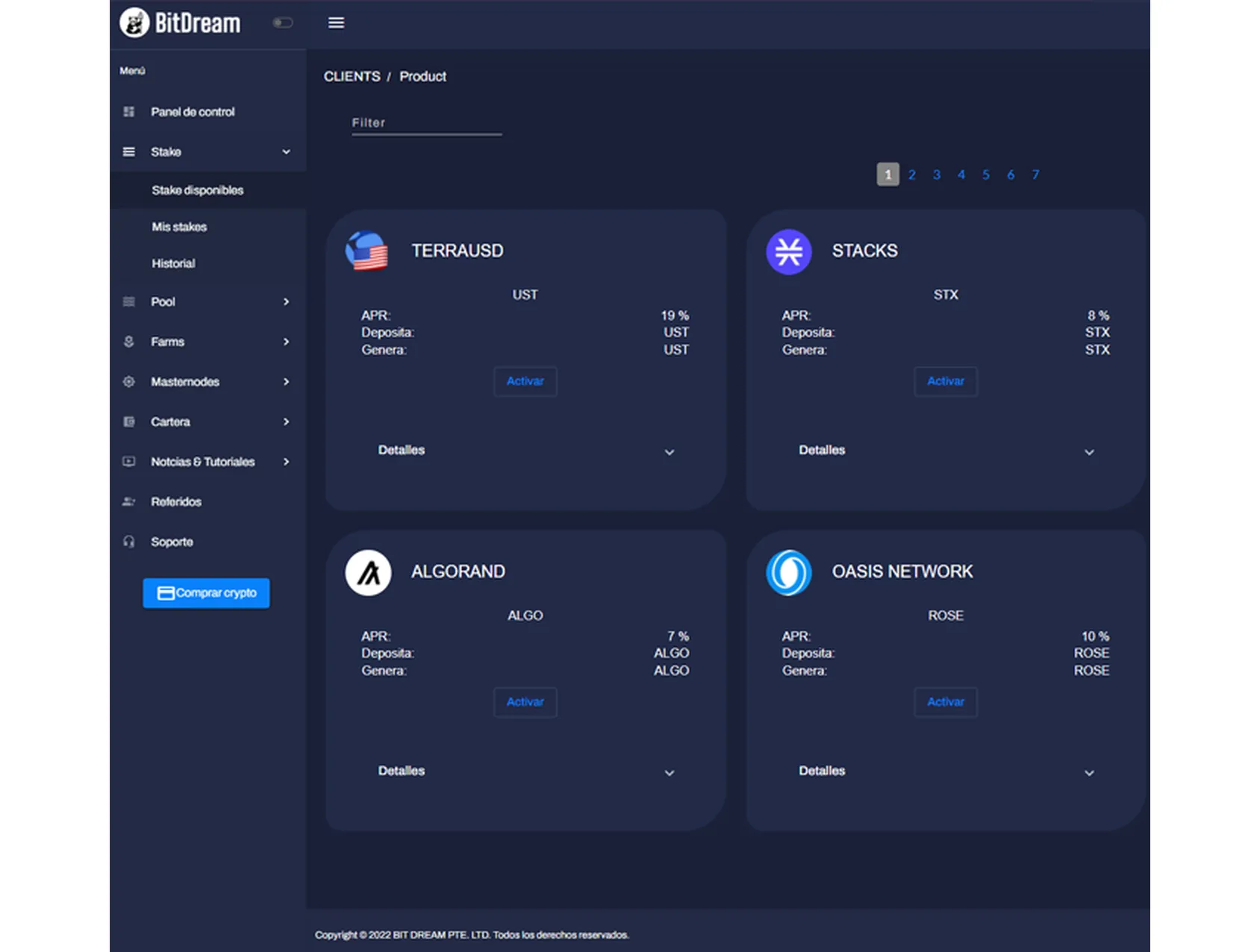
Bitdream.app is a platform-independent multi-chain DApp that enables users to participate in Staking, Masternodes, and DeFi protocol operations across more than 50 different blockchains. Beltsys Labs designed and developed the complete technical architecture for the project, from smart contracts to the user interface.
Development Challenge
The project’s main challenge was building a decentralized application capable of natively interacting with dozens of heterogeneous blockchains, each with its own consensus protocol, transaction format, and staking model. Unlike conventional DApps that operate on a single network, Bitdream required an abstraction layer that unified the user experience regardless of the underlying blockchain.
Furthermore, the target audience included both technical users familiar with wallets and private keys, as well as users approaching the crypto ecosystem for the first time. This demanded an interface that simplified inherently complex operations (stake delegation, masternode deployment, liquidity pool interaction) without sacrificing the control and transparency that advanced users expect.
An additional requirement was the integration of a Fiat On-Ramp system that would allow users to acquire crypto assets directly with a credit or debit card, eliminating the entry barrier of having to use an external exchange before being able to operate on the platform.
Technical Solution
Multi-Chain Architecture with Web3.js
The core of the solution is an adapter layer built on Web3.js that abstracts the particularities of each blockchain. A specific adapter was implemented for each supported network, translating the platform’s generic operations (query balance, delegate stake, claim rewards) into the RPC calls and transaction formats specific to that network. This architecture allows new blockchains to be incorporated by adding a new adapter without modifying the business logic or user interface.
The adapters also handle differences in confirmation times, fee structures, and unbonding periods between networks, presenting this information to the user in a normalized format.
Smart Contracts in Solidity
For EVM-compatible networks, smart contracts were developed in Solidity to manage shared staking pools. These contracts allow multiple users to aggregate their funds to reach minimum staking thresholds or masternode collateral requirements that they could not meet individually. The contracts implement proportional reward distribution and pool entry/exit mechanisms with configurable waiting periods.
Contract security was addressed through thorough code reviews and automated tests covering edge-case scenarios such as simultaneous withdrawals, reentrancy, and numeric overflows.
Node.js Middleware
The Node.js backend acts as an orchestration layer between the frontend and the multiple blockchains. This middleware manages on-chain event indexing, real-time yield (APY) calculation for each staking option, data aggregation from multiple price sources, and user session management.
The middleware also coordinates integration with the Fiat On-Ramp provider, managing the identity verification (KYC) flow, purchase order creation, and delivery of acquired crypto assets to the user’s wallet within the platform.
React Interface for Non-Technical Users
The user interface was developed in React with accessibility as a top priority. The main dashboard presents available staking and masternode options organized by blockchain, with clear indicators for expected yield, risk level, and lock-up periods. Operation flows were designed as guided steps that explain each action before requesting user confirmation.
The masternode management panel allows users to monitor their node status, review the history of received rewards, and configure availability alerts. For users participating in shared pools, the interface displays their proportional share and accumulated rewards in real time.
Fiat On-Ramp Integration
The direct card purchase system was integrated as an embedded flow within the platform itself, avoiding redirects to external services. Users can select the cryptocurrency they wish to acquire, enter the amount in their local fiat currency, complete the card payment, and receive the funds directly in their Bitdream account, ready to be allocated to any staking or masternode operation.
Results
The platform achieved native compatibility with over 50 blockchains, providing users with a unified access point for staking and masternode operations that previously required managing multiple wallets and independent tools. The user base grew to surpass 60,000 registered users, with sustained growth in transaction volume.
The modular adapter architecture proved its scalability by enabling the incorporation of new networks without disrupting the existing service. The Fiat On-Ramp system significantly lowered the entry barrier for users new to the crypto ecosystem, directly contributing to user base growth.